Loading Report View…
0/ 100
mentalwealthla.com Website Audit Report
mentalwealthla.com scored 77 out of 100 in this SavageAudit website audit covering Performance, SEO, Design, Copy, User Experience, and Conversion. The report uses captured website evidence to explain what is working, what is limiting the experience, and which improvements deserve attention first.
“Beautiful therapy branding, then the site trips over its own shoelaces.”
Mental Wealth LA brought a serene outfit to a kitchen fire. The page looks like it understands depth-oriented therapy; the website itself keeps forgetting where the door is, where the form is, and apparently where the scripts are too.
 https://mentalwealthla.com/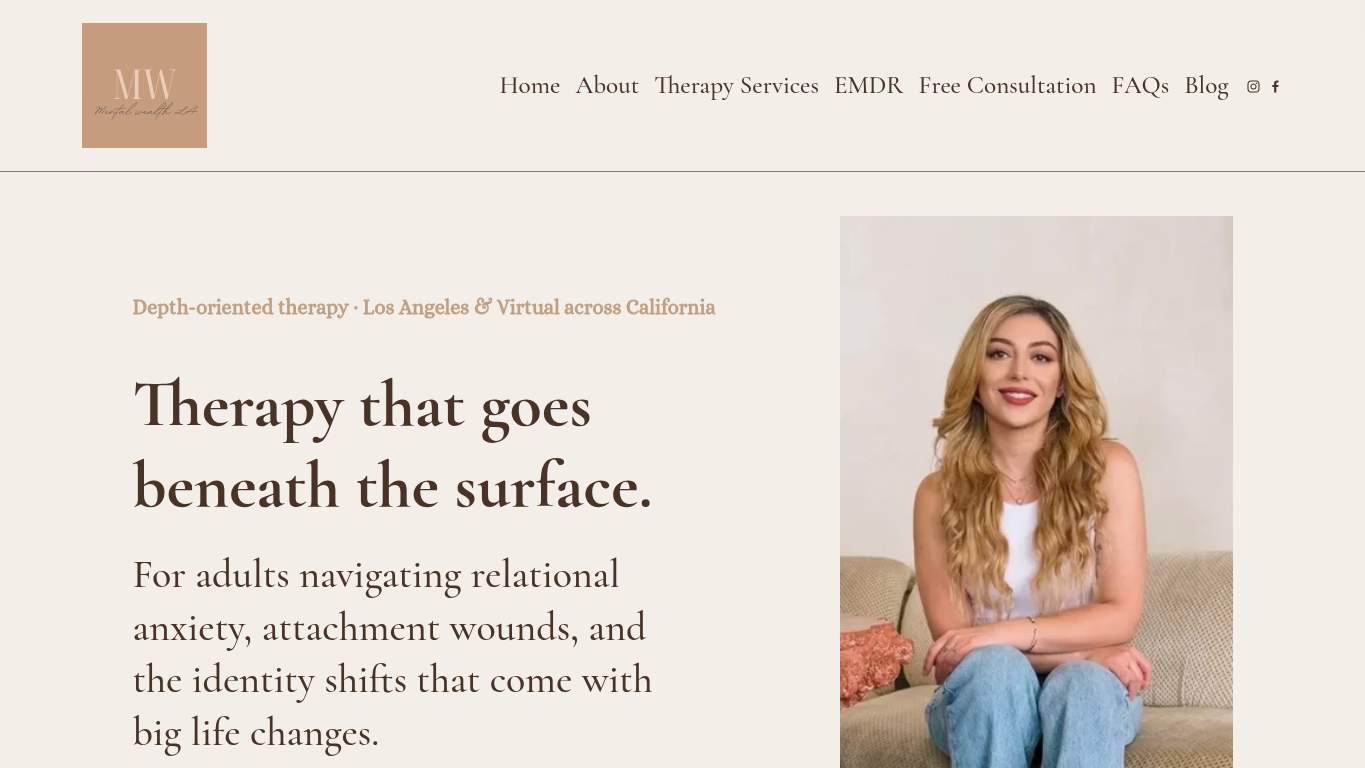
TECHNICAL SUMMARY
The good news: SEO is strong, canonical is clean, schema is present, and the page is crawlable. The bad news: performance and UX are kneecapped by a 6.9s LCP, 14.3s time to interactive, 2,685 KiB of page weight, 443 KiB of unused JavaScript, 2 console errors, and 4 broken assets — including a mixed-content Psychology Today script blocked over HTTPS. Fix the hero asset and script bloat first; right now the site is spending more energy loading than persuading, which is brutal for a booking-based therapy practice that needs trust and a fast path to a free consultation.
Where It Burns
6 categoriesWebsite Audit Findings for mentalwealthla.com
SavageAudit identified 36 visible findings and recommendations across 6 audit categories. Each section below combines the category score with observed evidence and prioritized fixes.
6001 PERFORMANCELCP 6.9s8902 SEOSEO Score 1009303 DESIGNH1 Count 29104 COPYWord Count 12936405 UXJS Errors 27506 CONVERSIONForms 0
01
PERFORMANCE AUDIT
60
LCP6.9sTime to Interactive14.3sTotal Page Weight2,685 KiBUnused JavaScript Savings443 KiB
- 🔥A 6.9s LCP is not a first impression; it’s a waiting room with the lights off and a clipboard from 2019.
💀
Performance here is a slow-motion intake form: the page shows up late, overpacks the suitcase, and still expects people to book.
- →Compress the hero images and convert them to WebP/AVIF so the page stops dragging a 6.9s LCP behind it.LCP: 6.9 sImpact: highEffort: medium
Why this matters
The main content is landing too late, and the hero is the first thing a visitor waits on before deciding whether to schedule a free consultation.
- →Defer non-critical JavaScript and strip render-blocking resources to cut the 230 ms TBT and stop the page from buffering itself into submission.TBT: 230 msImpact: highEffort: medium
Why this matters
Interaction is delayed while the browser is busy handling scripts instead of letting people click the CTA.
- →Enable CDN caching and serve static assets with long TTLs so the 4.6s first paint stops arriving like it took the scenic route.FCP: 4.6 sImpact: mediumEffort: low
Why this matters
A faster first paint makes the page feel alive sooner, which matters for trust and booking intent on a therapy site.
02
SEO AUDIT
89
SEO Score100Redirect Count1Console Errors2Broken Assets4
- 🔥The SEO is doing fine, but the site still takes a needless 1 redirect from mentalwealthla.com to www.mentalwealthla.com like it forgot its own mailing address.
💀
Search visibility is mostly intact, but the broken external dependencies make the site look less like a clinic and more like a citation crime scene.
- →Consolidate to one H1 tag so the page stops speaking in two headline voices at once.H1 Count: 2Impact: mediumEffort: low
Why this matters
Multiple H1s dilute heading hierarchy and make the page less clean for search and accessibility parsing.
- →Add descriptive alt text to the missing image so the lone unlabeled visual stops being invisible to search and assistive tech.Missing Alt: 1Impact: mediumEffort: medium
Why this matters
Even one missing alt attribute is avoidable SEO and accessibility debt on a clinic site that should be easy to understand.
- →Publish llms.txt or ai.txt with priority URLs and support paths so AI crawlers have a map instead of wandering around like they found your sitemap in a parking lot.AI Hints: MissingImpact: mediumEffort: medium
Why this matters
AI hint files are missing, so citation and retrieval systems have less guidance on the pages you want surfaced.
03
DESIGN AUDIT
93
H1 Count2Empty Headings4Heading Level Skipsh2->h4Missing Alt1
- 🔥Two H1 elements and 4 empty headings give the page a structure problem that feels like a beautiful bookshelf with several blank labels.
💀
The design is attractive, but the heading structure keeps wandering off like it got a better offer halfway through the page.
- →Add supporting imagery so the layout feels intentional instead of giving the eye a long existential walk.Images: 6Impact: mediumEffort: medium
Why this matters
With only 6 images, the page leans heavily on typography; a little more visual support would reduce the feeling of sparseness.
- →Fix the missing alt text to pass accessibility audits and stop the one unlabeled image from being the awkward guest at the table.Missing Alt: 1Impact: mediumEffort: medium
Why this matters
Even one missing alt attribute is enough to weaken accessibility on a service page where clarity matters.
- →Test spacing and alignment across mobile and desktop breakpoints so the oversized header/nav doesn't keep muscling in where the hero should breathe.Viewport: PresentImpact: lowEffort: medium
Why this matters
Responsive support exists, but layout balance still needs checking to preserve visual hierarchy across devices.
04
COPY AUDIT
91
Word Count1293Sentence Count65CTA Count3Social Proof Items1
- 🔥The copy has 1,293 words and 65 sentences, which is either thorough therapy education or a very determined way to avoid saying the one sentence people need.
💀
The writing is strong, but it still hides the offer behind a very tasteful stack of paragraphs and one lonely proof point.
- →Tighten the headline to state the value in one sentence so the page stops making visitors decode the promise like a private message.H1 Count: 2Impact: highEffort: low
Why this matters
The current headline setup is split across two H1s, which blurs the core offer for people deciding whether to book.
- →Break long paragraphs into shorter sentences and bullets so the 20-word average sentence length doesn’t read like a dissertation in a cardigan.Avg Words/Sentence: 20Impact: lowEffort: medium
Why this matters
Readable copy helps anxious visitors absorb specialties, process, and next steps without working for it.
- →Make the primary CTA stand out more clearly so the 3 consultation prompts stop blending into the furniture.CTA Count: 3Impact: mediumEffort: low
Why this matters
The site already has CTAs; the issue is that the primary action needs to be unmistakable for booking intent.
05
UX AUDITUSER EXPERIENCE AUDIT
64
JS Errors2Broken Assets4Layout Shifts2CLS0.031
- 🔥Two console errors are enough to make the page feel like it’s quietly apologizing to the browser in the background.
💀
The user experience is where the site starts dropping plates: errors, blocked scripts, and broken assets all make the visit feel less stable than the branding suggests.
- →Fix the client-side JavaScript errors so interactions don’t fail silently in production.JS Errors: 2Impact: highEffort: medium
Why this matters
Console errors can break behavior that users depend on, especially on a booking-focused clinic site.
- →Repair the failed asset URLs and deployment paths so scripts, images, and stylesheets load cleanly instead of playing hide-and-seek.Broken Assets: 4Impact: highEffort: medium
Why this matters
Broken assets directly undermine reliability and can interfere with page behavior and trust.
- →Keep nav and footer links consistent across pages so visitors don’t have to relearn the map every time they move around the site.Nav/Footer: Nav / FooterImpact: lowEffort: medium
Why this matters
Consistency reduces friction when users are comparing specialties, location, and contact options.
06
CONVERSION AUDIT
75
Forms0Inputs0CTA Count3Social Proof1
- 🔥There are 0 forms and 0 inputs on a booking site, which is one way to make a free consultation feel spiritually available but technically imaginary.
💀
The page talks about the consultation, but the conversion path is so thin it looks assembled during a power outage.
- →Add a primary CTA above the fold that matches the core offer so visitors can book without hunting for the exit.CTA Count: 3Impact: mediumEffort: low
Why this matters
The site has CTAs, but the evidence suggests the main action is not prominent enough near the hero.
- →Offer a low-friction contact option such as a form, chat, or visible email so people have a real way to start the conversation.Contact Path: PresentImpact: lowEffort: medium
Why this matters
A booking-based clinic needs an obvious contact route, and the page currently has no form fields at all.
- →Place testimonials or trust signals near the CTA so the lone social proof item isn’t forced to carry the whole consent-to-book burden alone.Social Proof: 1Impact: mediumEffort: low
Why this matters
For anxiety and betrayal-trauma visitors, trust proof near the action is critical to reduce hesitation.
Audit overview
mentalwealthla.com Audit Summary
The good news: SEO is strong, canonical is clean, schema is present, and the page is crawlable. The bad news: performance and UX are kneecapped by a 6.9s LCP, 14.3s time to interactive, 2,685 KiB of page weight, 443 KiB of unused JavaScript, 2 console errors, and 4 broken assets — including a mixed-content Psychology Today script blocked over HTTPS. Fix the hero asset and script bloat first; right now the site is spending more energy loading than persuading, which is brutal for a booking-based therapy practice that needs trust and a fast path to a free consultation.
Based on the category scores in this report, Design is the strongest area while Performance has the most room for improvement.
How SavageAudit Evaluated mentalwealthla.com
SavageAudit evaluated the public website at https://mentalwealthla.com/ across performance, technical SEO, design, copy, user experience, and conversion signals. Scores and recommendations reflect the website evidence available when this audit was generated on July 14, 2026.
Similar Website Audit Reports
Compare this result with other public SavageAudit reports that received a similar overall website score.